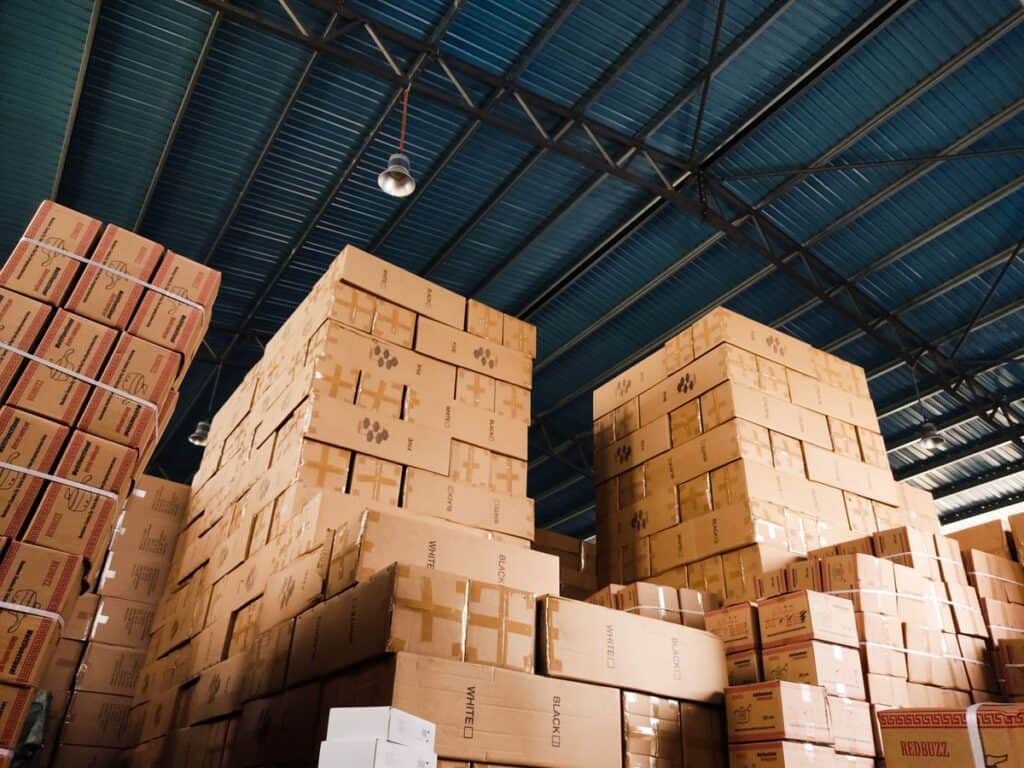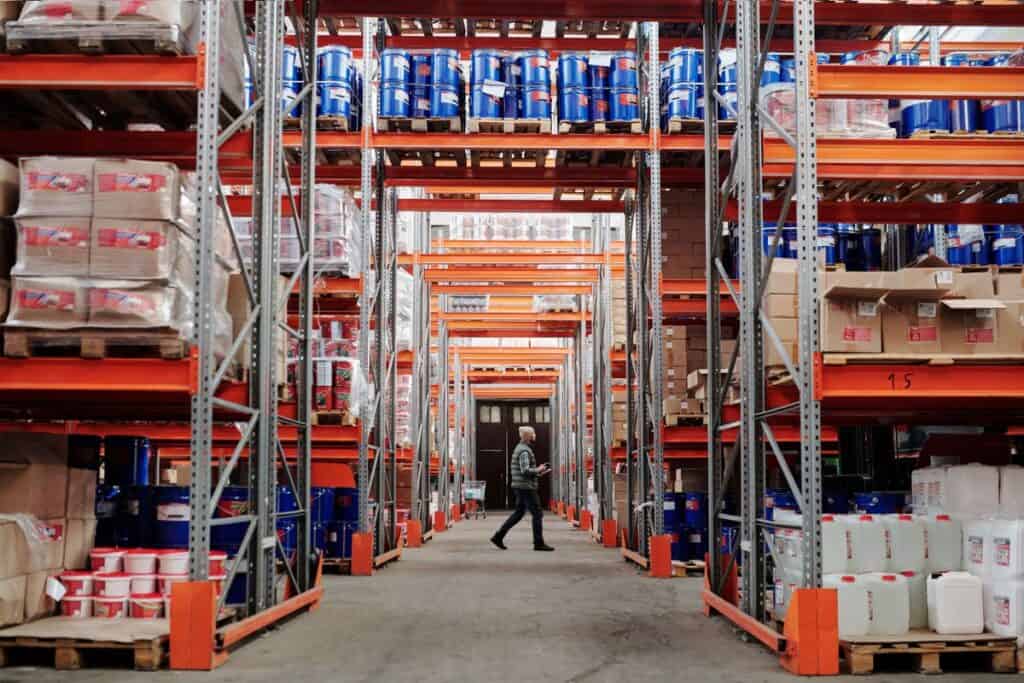

What is warehouse management? In one sentence: warehouse management is the discipline of running everything that happens inside the four walls, receiving, storage, inventory control, picking, packing, shipping, labor, safety, and the systems that coordinate them, so goods move accurately, quickly, and at a cost the business can sustain. It sounds like housekeeping from the outside. From the inside, it is one of the most consequential operating disciplines a product company has.
At Warehouse Recruiters, we have placed the leaders who practice this discipline since 2002, so we see daily what separates well-managed buildings from expensive ones. This guide covers what warehouse management actually includes, the core processes, the systems layer, the metrics that define success, and the human side, because warehouses are managed by people long before they are managed by software.
The Core Functions of Warehouse Management

Receiving and Put-Away
Every downstream error is cheaper to prevent at the dock. Good receiving verifies quantities and condition against orders, captures lot and serial data where it matters, and puts product away to the right locations promptly. Metrics like dock-to-stock time exist because product sitting unreceived is inventory the business owns but cannot sell.
Storage and Slotting
Where product lives determines how much walking, reaching, and re-handling every order costs. Slotting places fast movers in accessible golden-zone locations and slow movers in dense reserve, and re-slotting as demand shifts is a quiet, compounding productivity lever most buildings underuse.
Inventory Control
Accuracy is the foundation the rest stands on: cycle counting programs, variance investigation, and the discipline that keeps system records matched to physical reality. When accuracy slips, everything downstream degrades, service, purchasing, and eventually the trust of finance. We cover the leadership seat behind this in our guide to inventory control manager hiring.
Picking, Packing, and Shipping
Order fulfillment is usually the largest labor block and the biggest productivity battleground. Wave, batch, zone, and discrete picking each fit different order profiles, and the packing and shipping steps carry the compliance and carrier-cutoff pressures that customers actually feel.
Labor Management and Safety
Warehouse management is labor management. Planning headcount against volume forecasts, balancing shifts, training, and keeping people safe around equipment and heights are daily leadership work. Safety is not a compliance layer on top of the operation; in well-run buildings it is how the operation runs.
The Systems Layer

Modern warehouse management runs on a warehouse management system that directs put-away, assigns picks, tracks every location, and feeds performance data back to leadership. Around the WMS sit labor management modules, barcode and RFID capture, and increasingly automation, conveyors, sortation, goods-to-person robotics, that the software orchestrates. The system does not replace management judgment; it amplifies it, which is why the same platform produces excellent results under one leader and mediocrity under another.
Choosing and using these platforms well is its own competency. We break down the buying decision in our guide to choosing a warehouse management system and the human capability in warehouse management system skills.
The Metrics That Define Good Warehouse Management
Well-managed buildings run on a short list of numbers: inventory accuracy, order accuracy, on-time shipment, dock-to-stock time, units or lines per labor hour, and cost per order. Safety metrics, recordable incidents, near misses, sit beside them with equal weight. The craft is not tracking these numbers, which any dashboard can do, but managing with them: reading a two-point accuracy slide as an early warning, tying labor plans to forecast rather than habit, and knowing which metric to sacrifice temporarily when peak forces tradeoffs.
That last point separates operators from administrators. Peak season, equipment failures, and demand shocks force choices between speed, cost, and perfection, and warehouse management at its best is the judgment to make those tradeoffs deliberately rather than by accident. Our piece on peak season warehouse hiring covers the sharpest version of that test.
How Warehouse Management Differs by Operation Type
The discipline flexes with the mission of the building. An e-commerce fulfillment operation manages thousands of small orders, piece picking, parcel cutoffs, and heavy returns, so its management energy concentrates on wave planning, pack-station productivity, and scaling labor through seasonal swings. A retail distribution operation ships cases and pallets on replenishment cycles, so routing-guide compliance, chargeback avoidance, and trailer utilization dominate the agenda.
Third-party logistics buildings add multi-client complexity, separate inventories, service agreements, and billing under one roof, which makes client communication and cost-to-serve part of daily management. Cold chain and food-grade operations layer temperature discipline, sanitation, and traceability onto everything. Manufacturing-linked warehouses manage plant-to-dock flow, where the customer is a production schedule and timing tolerance is thin. The core functions stay constant across all of these; the weighting changes, and so does the leadership profile each building needs.
That variation is worth respecting when you hire. A leader who excelled in retail replenishment carries habits that may misfire in parcel-velocity e-commerce, and vice versa. The best matches pair a leader operating instincts with the specific building mission, which is exactly the mapping specialist screening exists to do.
Common Warehouse Management Mistakes
The same failure patterns repeat across industries. Managing to averages instead of arrival patterns, staffing a flat headcount against volume that arrives in waves. Treating the WMS as a record-keeper instead of a decision engine, leaving configuration frozen at go-live while the operation evolves. Letting accuracy discipline slide during busy periods, which converts one hard month into three, because inventory errors compound. Promoting the best picker into supervision without teaching supervision, then losing both a great picker and a struggling supervisor.
Underneath most of these sits the same root: leadership stretched too thin to manage proactively, so the building runs reactively from exception to exception. The fix is rarely another dashboard. It is usually the right leader with enough bench strength to plan the work rather than chase it, which is why the operations that invest in leadership depth outperform the ones that invest only in systems.
The People Who Practice It
Titles vary, warehouse manager, operations manager, distribution center manager, but the practice concentrates in a leadership layer that plans the work, develops supervisors, holds the standards, and connects the building to the rest of the business. A strong warehouse leader translates between the floor and finance, absorbs pressure from sales without passing panic downward, and builds the bench that keeps the operation running when they are not watching.
This is why the hiring decision matters more than any system purchase. The same building, same WMS, same labor market produces dramatically different results under different leadership, and the gap shows up in every metric above within two quarters. When we screen these leaders, we test for the operating judgment this guide describes, not just tenure in the title, an approach we detail in warehouse operations manager hiring.
Hire the Leadership That Makes It Work
If your warehouse needs the kind of management this guide describes, the fastest path is hiring a leader who has already practiced it at your scale and operating model. We place permanent, direct-hire warehouse and distribution leadership nationwide, screened by people who know the discipline firsthand. Reach Warehouse Recruiters through our contact page or call (201) 503-1082. For demand context, see the U.S. Bureau of Labor Statistics outlook for transportation, storage, and distribution managers.
Frequently Asked Questions
What is warehouse management in simple terms?
Warehouse management is running all the work inside a warehouse, receiving, storing, tracking, picking, packing, and shipping goods, plus the labor, safety, and systems that support it, so orders go out accurately and on time at a sustainable cost.
What is the difference between warehouse management and inventory management?
Inventory management decides how much stock to hold and where across a network; warehouse management executes the physical handling and accuracy of that stock inside a facility. They overlap at inventory control, but one is a planning discipline and the other an operating one.
What does a warehouse management system do?
A WMS tracks every item and location, directs put-away and picking, sequences work into waves, and reports performance. It is the operating software of the building, and its value depends on the leadership using it, configuration and discipline determine results more than the logo on the license.
What makes warehouse management good or bad?
The visible difference is metrics: accuracy, on-time shipment, productivity, and safety. The underlying difference is leadership judgment, planning labor to demand, holding standards daily, and making deliberate tradeoffs under pressure. Understanding what is warehouse management ultimately means understanding that the discipline is practiced by people, not installed with software.